Passwordless Login: The Future of Security Starts with QR Codes
Passwords have long been considered the cornerstone of digital security. However, there is a reality we can no longer ignore: passwords are also one of security’s weakest links.
An average employee needs to remember 8–12 different passwords every day, and in many cases these passwords are reused across multiple systems. The outcome is hardly surprising—most data breaches are linked to weak or compromised passwords.
So what’s the solution?
Perhaps it’s time to stop using passwords altogether.
Password Fatigue: A Real and Growing Problem
For employees who must log in to dozens of systems every day, password management is no longer sustainable. Complex password policies, instead of improving security, often push users to write passwords down or rely on simple, repetitive patterns. Mandatory password rotation only makes the situation worse.
As a result, security teams are overwhelmed with password reset requests. Productivity drops when users can’t access systems, and more importantly, real security threats may go unnoticed. Studies show that nearly 40% of IT support requests are related to password resets—representing a significant loss of both time and cost.
The Cost of Password-Based Attacks
Weak passwords are not just a theoretical risk—they have very real consequences. Credential stuffing attacks automate login attempts across multiple platforms using leaked password lists. If a password compromised on one platform is reused elsewhere, multiple accounts are instantly put at risk.
Phishing attacks are also becoming increasingly sophisticated. Users unknowingly enter their credentials on fake login pages, effectively handing their passwords over to attackers. For organizations, the average cost of a data breach can reach millions of dollars, including not only technical remediation but also legal processes, reputational damage, and the effort required to rebuild customer trust.
QR Code Login: Simple Yet Powerful
Passwordless authentication methods have gained significant traction in recent years. Approaches such as FIDO2, biometric authentication, and one-time codes are becoming more common. Among these, QR code–based authentication stands out as one of the most practical solutions, especially in enterprise environments.
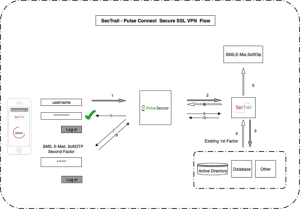
With this method, when a user attempts to log in on their computer, a dynamic QR code appears on the screen. The user scans the code using a mobile authentication app. The app verifies the user’s identity through the scanned QR code, enabling secure access without entering a password.
The dynamic nature of QR codes adds a strong layer of security. Each code is time-limited and single-use, expiring within minutes. Even if an attacker captures a screenshot of the QR code, it cannot be reused.
Why QR Codes?
User experience: Scanning a QR code with a phone is far faster than typing a password—especially a complex one. On average, users lose time several times a day trying to remember or reset passwords. QR code login reduces this process to just a few seconds.
Security: Credentials are never transmitted over the network, providing built-in protection against phishing attacks. Since QR codes are single-use and time-bound, they offer strong resistance against common attack vectors. Keyloggers are also rendered ineffective because no password is entered.
Ease of deployment: QR code authentication can be integrated into existing infrastructure with minimal disruption. It delivers a simple and seamless experience for users without requiring new hardware or complex installations. Existing smartphones are sufficient.
Built-in multi-factor authentication: QR code login is inherently multi-factor. It combines something the user has (their mobile device) with how they unlock it (PIN or biometric authentication).
Offline scenarios: Some advanced QR code systems support offline authentication mechanisms that continue to work during temporary internet connectivity issues. This is particularly valuable for field workers or environments with unreliable network access.
Enterprise Deployment
Passwordless authentication has become especially important in hybrid work models. Whether employees are in the office, working remotely, or traveling, they can enjoy the same secure and seamless login experience.
Modern solutions integrate smoothly with existing directory services such as Active Directory and LDAP. They can be used across all authentication points—from VPN access and applications to cloud services and even physical access control systems. SecTrail MFA delivers this passwordless access experience while helping organizations modernize their authentication processes.
Centralized Management and Reporting
QR code–based authentication systems provide security teams with deep visibility. Login activity—who accessed what, when, from which device, and from which location—can be monitored through a centralized dashboard. Abnormal login attempts, risk scoring, and user behavior analytics help identify potential threats at an early stage.
Compliance and Standards
Passwordless authentication solutions help organizations meet the requirements of many compliance frameworks. Regulations such as GDPR, ISO 27001, and SOC 2 demand strong authentication mechanisms. QR code–based systems fulfill multi-factor authentication requirements in a modern and user-friendly way.
Audit logs are another key strength. Every authentication event is recorded in detail and can be reported when needed, making these systems highly valuable for both internal audits and external compliance reviews.
The transition process is also easier than expected. A hybrid model can be adopted, offering both password-based and QR code login options. This allows users to adapt at their own pace. In practice, most users voluntarily switch to QR code login after experiencing how convenient it is.
Return on Investment
Moving to passwordless authentication is not just a security investment—it’s an operational efficiency investment. Reduced IT support requests, improved user productivity, and avoidance of costly data breaches allow organizations to see a return on investment quickly. Many organizations begin to realize these benefits within the first year.
Conclusion: Security and Usability Can Coexist
Traditionally, cybersecurity strategies required a trade-off between security and usability. Passwordless authentication changes that equation by delivering a more secure and user-friendly access experience.
Modern approaches like QR code login reduce the operational burden on security teams while improving the user experience and strengthening an organization’s overall security posture. More than 90% of users prefer QR code login over traditional passwords, citing both speed and convenience.
Now is the time to rethink your authentication strategy as part of your digital transformation journey. Passwordless authentication is no longer a luxury—it is a necessity for staying competitive and maintaining strong security. For more information contact to learn more.